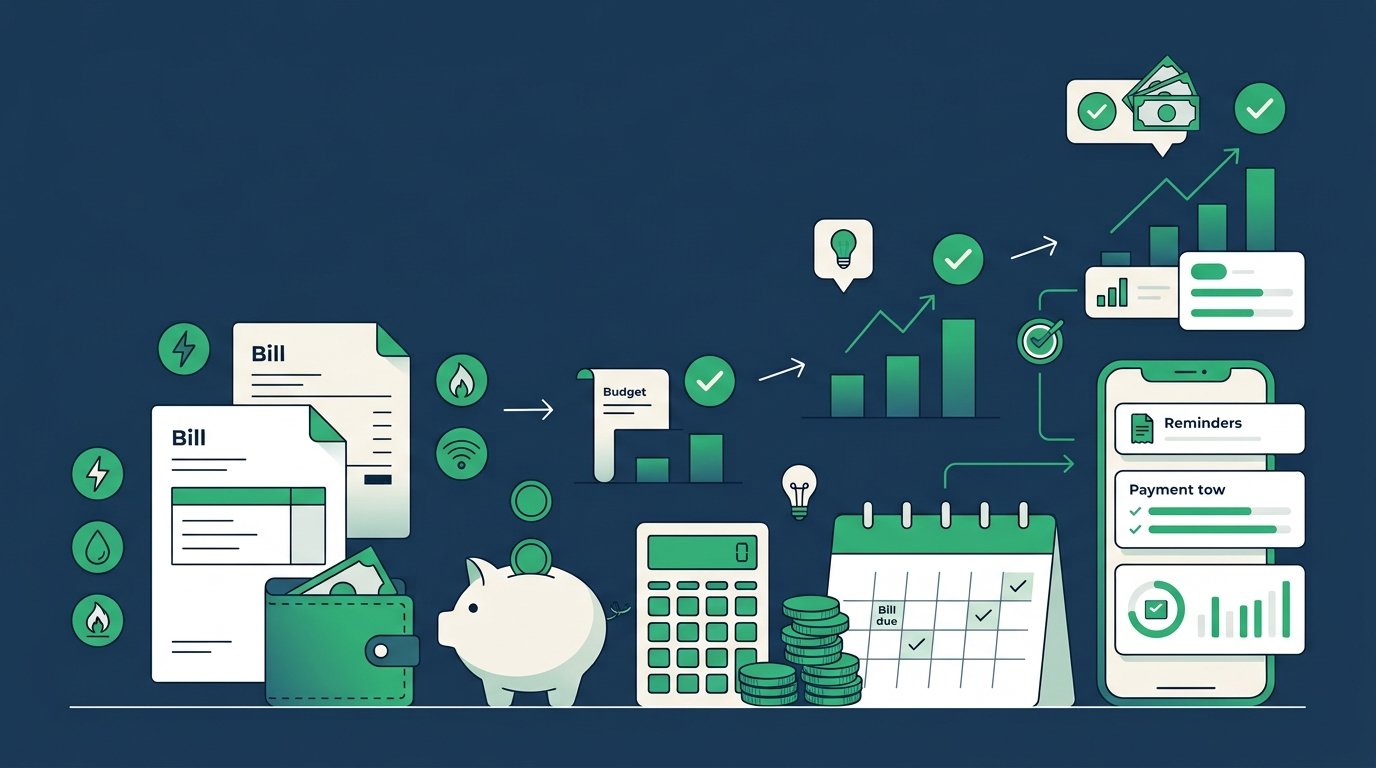
Our Utility Bill Was Quietly the Biggest Budget Leak We Had
For a long time, our utility bills for our family felt like one of those costs you just accept, fixed, unavoidable, nothing to be done about it. Then one particularly rough winter month, the bill jumped high enough that I finally sat down and actually looked at where the money was going. Turns out there was a lot more room to lower it than I expected, without making the house uncomfortable.
Here are the ten steps that actually moved the number, in the order I’d tackle them.
1. Get One Full Year of Bills Before Changing Anything
Before cutting anything, pull twelve months of utility bills if you can. Usage swings a lot by season, and comparing a single month against another isn’t useful. Seeing the full year showed us exactly which months were driving the average up, which made the next steps far more targeted.
2. Call Your Provider and Ask About a Budget Billing Plan
Most utility companies offer a budget or “levelized” billing plan that averages your annual usage into equal monthly payments. This didn’t reduce our actual usage, but it smoothed out the painful high-bill months, which made the whole budget easier to plan around.
3. Fix the Easy Air Leaks First
A cheap tube of weatherstripping and some door draft stoppers made a noticeable difference in heating costs, for under $20 total. Check around windows, doors, and any attic access points, these are usually the biggest and cheapest wins before considering anything bigger.
4. Adjust the Thermostat by Just a Few Degrees
Lowering the thermostat 2-3 degrees in winter (or raising it in summer) barely changes comfort but does show up on the bill over a full month. A programmable or smart thermostat automates this without anyone having to remember to adjust it manually every day.
5. Switch Remaining Bulbs to LED
If you still have any older bulbs around the house, replacing them is one of the fastest payback improvements available. The cost is small, and the difference shows up on the very next bill, not months later like some bigger upgrades.
6. Unplug or Power Down Devices That Draw Standby Power
Game consoles, chargers, and some appliances pull power even when “off.” A power strip that fully cuts power to a group of devices at night made a small but real dent in our electric bill once we got in the habit of using it.
7. Check for Water Leaks, Especially Toilets
A running toilet can waste a surprising amount of water without being obviously loud about it. A simple test: add a few drops of food coloring to the tank, and check the bowl after 15 minutes without flushing. If color shows up, there’s a leak worth fixing.
8. Ask About Income-Based Assistance Programs
Many utility providers offer assistance programs based on income, sometimes even for households that don’t think of themselves as needing help. Checking eligibility takes a few minutes and costs nothing to ask about.
If your household is managing a tighter budget overall, our guide to budgeting on a low income covers other ways to find breathing room beyond utilities specifically.
9. Wash Full Loads and Use Cold Water When Possible
Running the washing machine and dishwasher only with full loads, and switching to cold water for laundry when the load allows it, reduced both our water and electric usage without changing our actual routine much.
10. Review Your Bill Every Few Months, Not Just When It Spikes
We only ever looked closely at the bill when it jumped unexpectedly, which meant we were always reacting instead of catching drift early. A quick check every few months, comparing against the same month last year, catches a creeping increase before it becomes a shock.
If you’re tracking this alongside other household costs, our Budgeting Basics for Beginners hub covers the broader system this fits into.
What This Added Up To
None of these ten steps were dramatic on their own. Combined, they brought our monthly average down noticeably, enough to matter in a tight family budget, without anyone in the house feeling like we were suddenly living with the heat off or lights unplugged.
Tools and Resources
Most utility providers list assistance programs and budget billing options directly on their websites, worth checking before assuming there’s no flexibility. For broader guidance on managing household costs, the Consumer Financial Protection Bureau has free resources worth a look.
Common Mistakes to Avoid
- Don’t compare a single month’s bill in isolation — usage swings a lot by season
- Don’t skip income-based assistance programs assuming you won’t qualify
- Don’t wait for a bill spike to review usage — check periodically instead
- Don’t overlook small fixes like air leaks and standby power before considering bigger changes
Final Thoughts
Lowering utility bills for a family on a tight budget doesn’t require a dramatic lifestyle change. Small, cheap fixes, checked and reviewed regularly, added up to a real difference for us without making the house feel any less comfortable. Start with the free and cheap steps first, they usually make the biggest early dent.
For more first steps like this, check out our Saving Money & Frugal Living hub.
FAQs
What’s the fastest way to lower a family’s utility bill?
Cheap fixes like weatherstripping, LED bulbs, and a few degrees on the thermostat usually show results on the very next bill, faster than bigger upgrades.
Is budget billing worth it for a family on a tight budget?
Yes, if unpredictable high-bill months make planning difficult. It averages your annual usage into equal payments, which doesn’t lower the total cost but smooths out the swings.
Should I check for utility assistance programs even with a steady income?
It’s worth checking regardless. Many programs have income thresholds that cover more households than people assume, and there’s no cost to simply ask.
How often should I review my utility bills?
Every few months, comparing against the same month the previous year, catches a creeping increase early instead of only reacting to a sudden spike.
Do small changes like unplugging devices actually make a difference?
Individually, the impact is small, but combined with several other small changes, it adds up to a noticeable difference on a monthly bill over time.