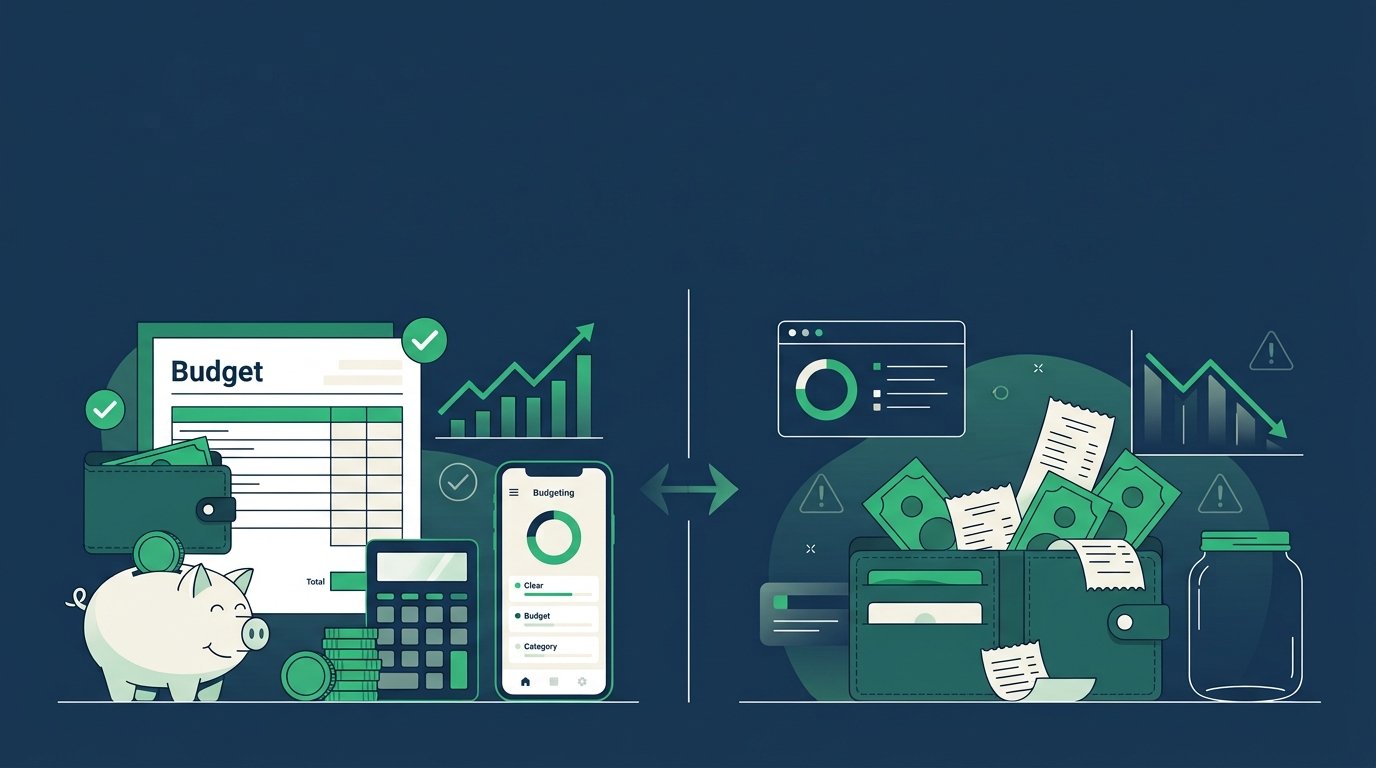
I Ran Both Ways for a Year to See the Actual Difference
Before I ever budgeted, I spent an entire year with no system at all, just spending as money came in. The next year, I set up a full zero-based budget as a first-time budgeter and stuck with it. Comparing those two years side by side wasn’t just about how I felt, it showed up in real dollar amounts I hadn’t expected.
Here’s the honest breakdown of what “doing nothing” actually cost versus what running a zero-based budget took.
What “Doing Nothing” Looked Like
No categories, no tracking, just spending and checking my balance when I remembered to. It felt effortless in the moment, but the real cost showed up quietly:
- Two overdraft incidents that year, about $35 each
- A revolving credit card balance that hovered around $500-700 most of the year, carrying interest the entire time
- Zero savings by year’s end, despite having a fairly stable income the whole year
What Running a Zero-Based Budget Actually Involved
The following year, I assigned every dollar of income a specific job: fixed costs, flexible spending, and savings, until income minus expenses equaled zero. Setup took about an hour the first time; after that, a weekly check-in of roughly ten minutes kept it running.
- Listed every fixed cost and assigned it a category
- Split flexible spending into three broad categories
- Assigned a specific savings goal instead of leaving anything unassigned
- Reviewed weekly and adjusted categories that ran over or under
If you’re building this system for the first time, our guide to the 50/30/20 rule is a simpler starting point if a full zero-based approach feels like too much at once.
The Real Cost Comparison
- Year without a budget: roughly $70 in overdraft fees, an estimated $100-150 in carried credit card interest, $0 saved
- Year with a zero-based budget: $0 in overdraft fees, no carried credit card balance, roughly $350 saved by year’s end
That’s a difference of well over $500 in avoided fees and interest, not counting the actual savings built up. The weekly time investment, about 10 minutes, was nowhere close to matching what it saved.
Being Honest About the Downside
Running a zero-based budget wasn’t effortless. The first month took real trial and error to get categories right, and I fell off tracking for about a week during a particularly busy stretch. That’s a real cost, just a much smaller one than what “doing nothing” was quietly costing in fees and interest the year before.
Why This Gap Matters Most for First-Time Budgeters
Without an existing system, small overspending patterns tend to compound rather than self-correct, especially with credit cards providing an easy buffer that hides the actual problem until the balance is already significant. A structured system, even with some setup friction, tends to pay for itself quickly once you actually compare the numbers.
Tools That Help
A basic Google Sheets template is enough to replicate this system, no paid app required. For general guidance on budgeting fundamentals, Investor.gov has a clear, free explainer aimed at beginners.
Common Mistakes to Avoid
- Don’t assume “doing nothing” is actually free — the fees and interest add up quietly over a year
- Don’t expect your categories to be accurate in month one; budget in time to adjust
- Don’t treat a missed week of tracking as a reason to abandon the system entirely
- Don’t skip a weekly review — amounts that worked initially rarely stay accurate without one
Final Thoughts
Comparing both years side by side made the real cost of “doing nothing” impossible to ignore, it was never actually free, it just hid its cost in fees and interest instead of a spreadsheet. A zero-based budget as a first-time budgeter takes some real setup effort, but the numbers made a stronger case for it than any general advice ever did.
For more first steps like this, check out our Budgeting Basics for Beginners hub.
FAQs
How much can skipping a budget actually cost in a year?
In this comparison, overdraft fees and carried credit card interest alone added up to well over $150 in a single year without any budgeting system.
Is a zero-based budget worth the setup time for a first-time budgeter?
Based on a direct comparison, roughly an hour of setup and 10 minutes a week of maintenance was far outweighed by the fees and interest avoided.
What if I fall behind on tracking for a week?
It happens. Pick back up with your normal weekly review rather than trying to reconstruct every missed transaction, and don’t treat it as a reason to quit.
Is a zero-based budget too complicated for a first attempt?
It has more setup than simpler methods like the 50/30/20 rule, but it’s manageable if you start with a small number of broad categories rather than a dozen detailed ones.
What’s the biggest risk of not budgeting at all?
Small overspending patterns tend to compound rather than self-correct, especially with credit cards masking the actual gap until the balance becomes significant.