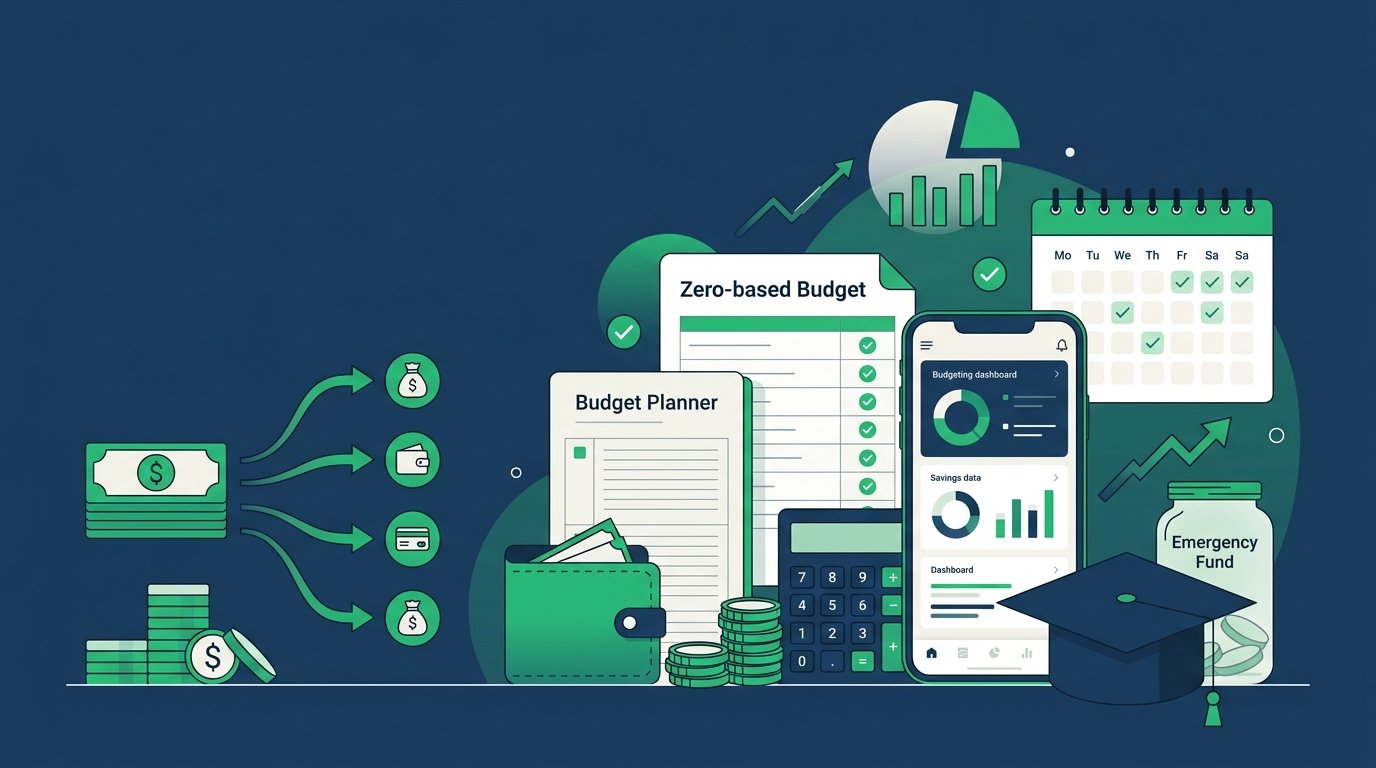
My First Salary Didn’t Come With a Manual
Getting a full-time salary after graduation felt like it should’ve been the easy part. It wasn’t. Suddenly I had rent without roommates, loan payments starting, and a paycheck that looked bigger on paper than it ever felt in my account. That’s when I decided to build a zero-based budget as a recent graduate, mostly out of not knowing what else to do with the sudden jump in responsibility.
Here’s the actual step-by-step process, built for someone doing this for the first time with a brand-new salary.
What a Zero-Based Budget Means for a New Salary
Every dollar of your take-home pay gets assigned a specific job, rent, groceries, loan payments, savings, until income minus expenses equals zero. Nothing sits unassigned, even the money going into savings has a defined purpose. It’s more hands-on than a percentage-based rule, but that structure is exactly what helps when your spending patterns are still brand new and undefined.
Step 1: Get Your Real Take-Home Number
Your salary on paper and what actually lands in your account are two different numbers once taxes, insurance, and any retirement contributions come out. Pull your first full paycheck and use that exact figure, not the number from your offer letter.
Step 2: List Every New Expense From This Transition
Recent graduates tend to underestimate how many new costs show up at once: full rent without a roommate split, a commute, professional clothing, student loan payments starting, health insurance premiums if they weren’t covered before. List every one of these specifically instead of assuming your old student budget still applies.
Step 3: Build Categories From Scratch, Not From Your Old Budget
Here’s the mistake I made initially: copying my college budget and just adding a few zeros. A new salary doesn’t mean scaling up old spending, it means building from what your life actually looks like now.
- Fixed costs: rent, insurance, minimum loan payments, subscriptions you’re keeping
- Semi-fixed costs: groceries, transportation/commuting, utilities
- Flexible spending: dining out, entertainment, personal spending
- Savings and extra debt payoff: assign this a specific job (emergency fund, extra loan payments, retirement)
Keep it to these four broad groups at first. You can split them into more detail once the habit is established.
Step 4: Separate Minimum Loan Payments From Extra Payoff
Minimum student loan payments count as a fixed cost. Anything extra you put toward the loan should come from your savings/debt category, tracked separately. Mixing these together made it hard to tell, in my first month, whether I was actually making progress or just meeting the minimum.
Step 5: Build a Small Buffer Before a Full Emergency Fund
The standard advice of 3-6 months of expenses can feel completely out of reach in your first months of full-time income, especially with setup costs from moving or starting a new job. Aim for a smaller buffer first, around $500-1,000, before working toward the bigger target. This gets real protection in place faster.
If you’re also dealing with irregular timing between paychecks and bills, our guide on breaking the paycheck-to-paycheck cycle covers that specific transition in more depth.
Step 6: Review Weekly for the First Few Months
Your spending pattern as a recent graduate isn’t settled yet. Commuting costs, social spending with new coworkers, and one-time setup expenses all shift as you adjust to full-time work. Check in weekly for at least the first two months rather than waiting for a full monthly review, and expect to reallocate categories more than once.
Tools That Help
A free Google Sheets template covers everything needed for this setup without an ongoing subscription cost, which matters when you’re also managing new expenses. For general guidance aimed at this exact transition, the Consumer Financial Protection Bureau has free resources worth bookmarking.
Once your categories settle, our guide to the cash envelope system for recent graduates pairs well if you want more structure around flexible spending specifically.
Common Mistakes to Avoid
- Don’t reuse your old student budget categories for a new salary
- Don’t mix minimum loan payments with extra payoff amounts
- Don’t aim for a full 3-6 month emergency fund before starting with a smaller buffer
- Don’t skip weekly check-ins during the first couple months while your spending pattern is still settling
Final Thoughts
Building a zero-based budget as a recent graduate isn’t about following a template, it’s about honestly mapping out what your new life actually costs, which almost always looks different than your old student budget. Start with four broad categories, build a small buffer first, and check in weekly until your spending pattern settles. It took me about two months before mine felt accurate.
For more first steps like this, check out our Budgeting Basics for Beginners hub.
FAQs
How is a zero-based budget different for a recent graduate versus a student?
It has to account for entirely new costs, like full rent, loan payments starting, and commuting, that didn’t exist the same way during college. Reusing an old student budget usually doesn’t work well.
Should I build a full emergency fund right away?
Not necessarily. A smaller buffer of $500-1,000 built quickly offers real protection sooner than waiting to reach the standard 3-6 month target.
How often should I adjust my budget as a recent graduate?
Weekly for the first couple of months, since spending patterns often shift as you settle into full-time work and a new routine.
Should minimum and extra loan payments be tracked separately?
Yes. Mixing them together makes it hard to tell whether you’re actually making progress on debt or just meeting the minimum required payment.
Do I need a paid app to build this budget?
No. A free spreadsheet covers everything needed, which is worth considering given the number of new expenses that come with starting a first full-time job.