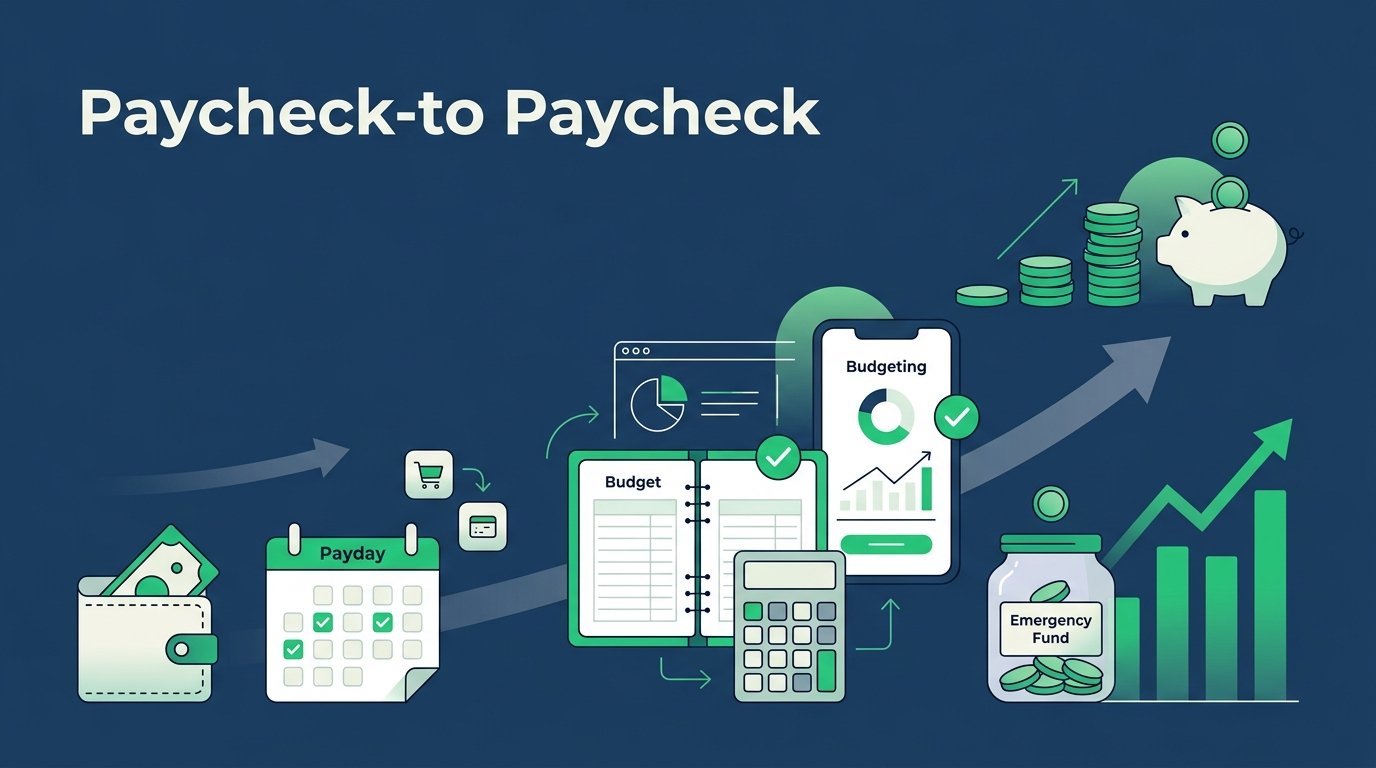
Six Months Into My First Job, and Still Broke Every Payday
I remember thinking a full-time salary would fix everything. It didn’t. Six months after graduating, I was still checking my account balance the day before payday, hoping there was enough left for gas. That’s the paycheck-to-paycheck cycle for recent graduates nobody really warns you about — the one where you’re earning more than you ever have, and somehow still running on empty.
It took me a while to figure out why it kept happening, and even longer to actually break it. Here’s what I learned.
Why the Paycheck-to-Paycheck Cycle Hits Recent Graduates So Hard
It’s rarely one big mistake. It’s usually a stack of small ones that add up right when your income jumps for the first time:
- Lifestyle creep the moment a “real” paycheck hits your account
- Student loan payments starting right when you’re also paying rent for the first time without roommates from college
- No emergency fund built up yet, so every surprise cost goes straight on a credit card
- Moving expenses, work wardrobe, and setup costs that hit all at once in year one
None of these are irresponsible on their own. They just all land in the same six-month window, which is exactly why the cycle feels impossible to escape at first.
Step 1: Find Out Where the Cycle Is Actually Coming From
Before fixing anything, I had to actually see the pattern. I pulled three months of bank statements and separated spending into “existed before I graduated” and “new since I started earning a full salary.” That second list was where almost all the damage was.
For me, it was a nicer apartment, a car payment I didn’t need yet, and eating out constantly because I “finally had money.” Your list will look different, but this step matters more than any budgeting app.
Step 2: Separate Fixed Costs From Cycle-Feeding Habits
Rent and loan minimums aren’t going anywhere. But a lot of what keeps recent graduates paycheck-to-paycheck isn’t fixed at all, it’s habits that scaled up with the new salary. Here’s the split that helped me:
- List true fixed costs: rent, minimum loan payments, insurance, utilities.
- List “upgraded” costs since starting your job: nicer apartment, new car, more takeout, new subscriptions.
- Pick one or two upgraded costs to roll back first, not all of them at once.
I started with food delivery, which alone freed up more room than I expected.
Step 3: Build a Tiny Buffer Before Trying to Save Big
Every article told me to save three to six months of expenses. As someone living paycheck to paycheck, that number felt like a joke, and honestly, it discouraged me from starting at all.
What worked instead: a $500 buffer, nothing more, built as fast as possible. That’s usually enough to stop a single surprise expense from putting you back on a credit card. Once that existed, breaking the actual cycle got a lot easier, because one bad week didn’t undo everything.
Step 4: Time Your Bills Around Your Actual Paydays
This one sounds small but made a real difference. A lot of recurring bills default to due dates that don’t match when you actually get paid, which is what causes that “broke right before payday” feeling even when your income covers everything on paper.
Most banks and billers let you request a due date change. I moved my rent and card due dates closer to my payday, and the constant scramble mostly disappeared.
Step 5: Automate Before You Can Talk Yourself Out of It
The cycle kept resetting every month because saving was the last thing I did, after spending, instead of the first. Setting up an automatic transfer the day my paycheck lands, even a small one, changed that completely. If the money moves before you see it in your checking account, it stops feeling like a decision every single payday.
If you’re building this system from scratch, our guide to building a budget spreadsheet works well alongside automated transfers.
Tools That Help
Most banking apps now let you set recurring auto-transfers for free, which is really the core tool here. If you want more structure, the Consumer Financial Protection Bureau has free resources specifically for people managing money independently for the first time.
Once your buffer is built, our guide on the 50/30/20 rule is a solid next step for structuring the rest of your paycheck.
Common Mistakes to Avoid
- Don’t let your lifestyle scale up as fast as your salary did
- Don’t aim for a 3-6 month emergency fund before you’ve built even a small buffer first
- Don’t leave bill due dates misaligned with your actual payday
- Don’t save “whatever’s left” — automate it before you see the money
Final Thoughts
Breaking the paycheck-to-paycheck cycle as a recent graduate isn’t really about earning more, most of us already got the raise we thought would fix it. It’s about catching lifestyle creep early, building a small buffer fast, and automating savings before spending has a chance to eat it. It took me about four months to feel a real difference, not overnight, but it did happen.
For more first steps like this, check out our Budgeting Basics for Beginners hub.
FAQs
Why do recent graduates end up paycheck-to-paycheck even with a full-time salary?
It’s usually lifestyle creep combined with new expenses like loan payments, rent without roommates, and setup costs all hitting at once in the first year of full-time work.
How much should I save first to break the cycle?
Start with a small buffer, around $500, rather than the full 3-6 month emergency fund. That buffer alone prevents most single surprise expenses from restarting the cycle.
Does changing my bill due dates actually help?
Yes. Aligning due dates with your payday reduces the feeling of being broke right before payday, even when your income technically covers your expenses.
Should I automate savings even if I can only save a small amount?
Yes. Automating even a small transfer the day you’re paid is more effective than saving “whatever’s left,” since spending tends to expand to fill whatever’s available.
How long does it usually take to break the paycheck-to-paycheck cycle?
It varies, but a few months of consistent small changes — trimming one or two upgraded expenses, building a buffer, and automating savings — is a realistic timeline for most recent graduates.